

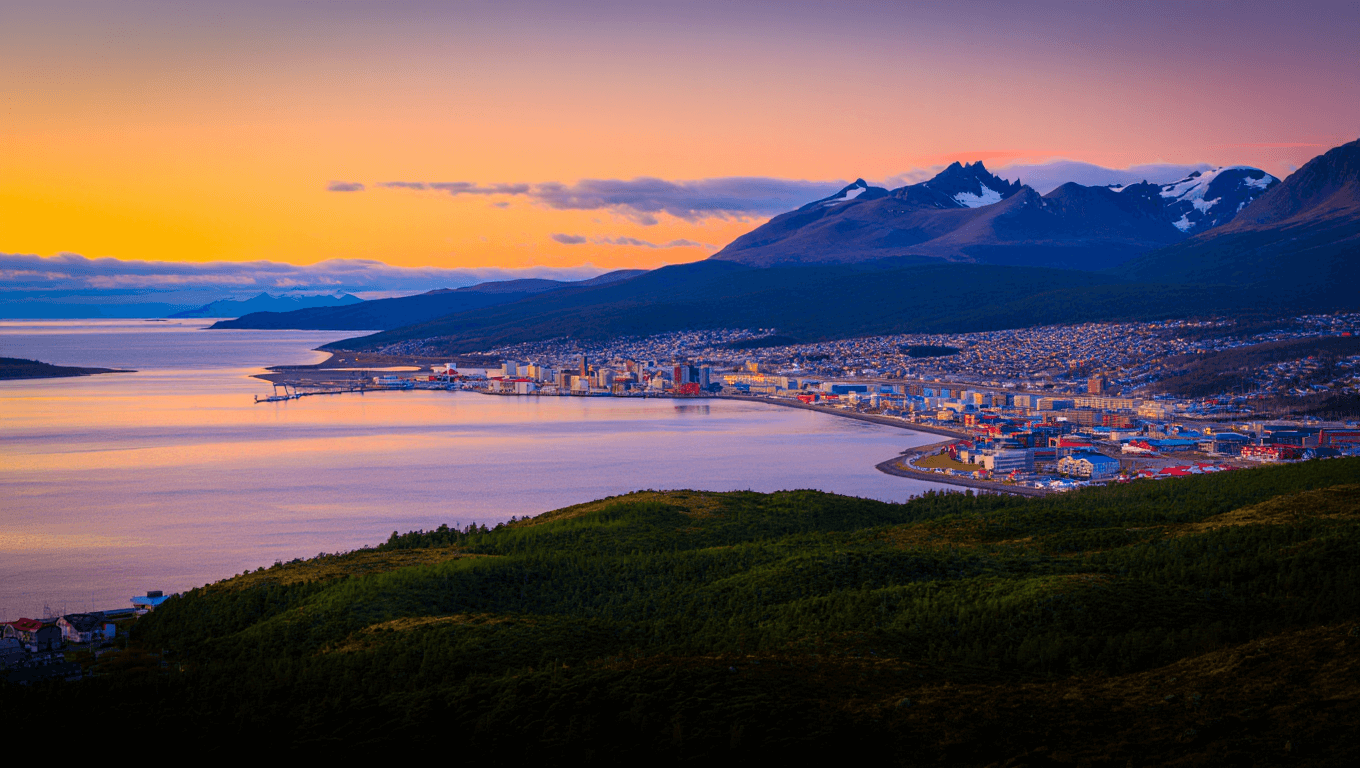
Did you know that sunset in Ushuaia during summer can occur after 10:30 p.m.?
On December 21st—the longest day of the year—the Southern Hemisphere enjoys up to 17 hours of daylight. On this special day, the sun rises at around 4:30 a.m. and remains visible well into the night.
This phenomenon is just one of the exotic aspects of Tierra del Fuego’s climate. In the austral summer, which officially begins on December 21st, daylight can stretch up to 18 hours, with sunrise as early as 3:30 a.m. However, these conditions change dramatically depending on the season in which you visit the southernmost city in the world.
During your visit to Ushuaia, you can attend the National Festival of the Longest Night, organized by the Municipality of Ushuaia, where national artists typically perform. The event usually takes place around June 21st, commemorating the winter solstice and the year’s shortest day in the Southern Hemisphere.
After reading this article, you’ll know everything about sunset in Ushuaia, including how it changes with the seasons, the exact daylight hours, and the best activities to enjoy while the sun sets over this one-of-a-kind corner of the world.
What Sunset in Ushuaia Is Like in Each Season
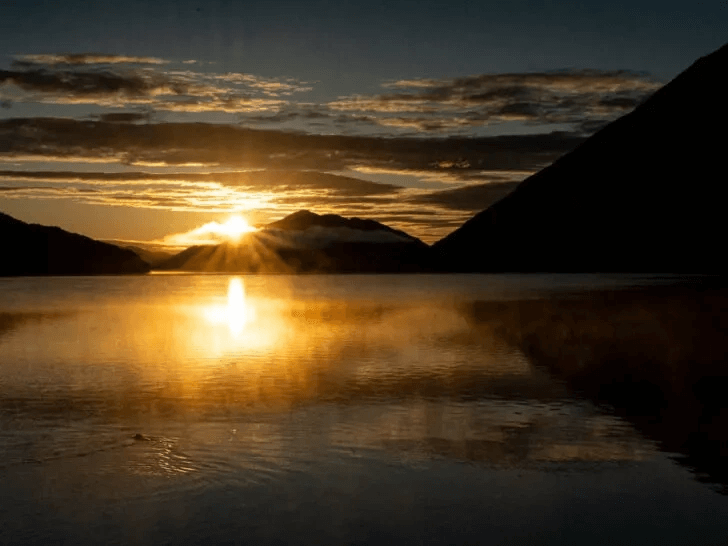
Sunsets in Ushuaia vary dramatically throughout the year.
During summer, the phenomenon becomes a late-night spectacle, with sunsets occurring between 10:00 p.m. and 11:00 p.m. The sky lights up in striking shades of red and gold as the sun drops behind the mountains.
Winter, on the other hand, brings significantly reduced daylight. Sunset arrives early—around 5:00 p.m. or 6:00 p.m., leaving only about seven hours of daylight. During the winter solstice, specifically on June 20th, Ushuaia experiences the shortest day of the year, with just 7 hours and 12 minutes of natural light.
Spring gradually brings longer days. From September onward, sunrises and sunsets paint the sky with intense colors, and daylight hours extend progressively as the season advances.
Autumn offers a dreamlike setting with its distinctive foliage colors. It marks a transition where days start to shorten, yet still allow for beautiful twilight views.
Lakes Escondido and Fagnano are perfect spots to admire these magnificent sunsets reflected on the water, while Ushuaia’s waterfront provides spectacular views of the austral dusk.
Daylight Hours and Sunset Times in Ushuaia
In Ushuaia, the length of the day changes dramatically throughout the year.
The contrast between seasons is striking: while December 21st (austral summer solstice) enjoys 17 hours and 20 minutes of natural light, June 20th (the shortest day) offers barely 7 hours and 12 minutes.
During January, the city receives up to 516 hours and 28 minutes of sunlight, compared to June, which records only 219 hours and 54 minutes. Sunrise also varies considerably: in peak summer, the sun rises at around 4:49 a.m., while in winter it may not appear until 9:59 a.m.
Sunsets show equally striking differences.
-
In December, the sun sets at around 10:13 p.m., creating the region’s characteristic long twilight.
-
In June, night falls early, around 5:10 p.m.
September marks an interesting transition point: during this month, daylight increases by 2 hours and 6 minutes, going from 10 hours 43 minutes at the beginning of the month to 12 hours 50 minutes at the end.
This unique light distribution allows visitors to enjoy distinct seasonal experiences—from summer mornings lit as early as 3:30 a.m. to winter days where darkness arrives just after midday.
What to Do During Sunset in Ushuaia
Ushuaia’s long daylight hours offer unique opportunities to enjoy spectacular sunsets. In summer, outdoor activities extend late into the evening thanks to the 18 hours of daylight.
If you prefer land-based adventures, a night trek up Monte Susana offers a 360° panoramic view of the Beagle Channel and the city illuminated by the setting sun. Other excellent sunset experiences include:
-
City & Wine
-
Almanza Sunset & Penguins
-
Esmeralda Sunset Trek with Dinner in a Dome
-
Martial Sunset Experience
-
Monte Susana Peak Trekking
-
Lagos 4×4 PM Tour
Conclusion
Ushuaia offers a truly unique experience with its dramatic interplay of light and darkness throughout the year. The contrast between nearly 18 hours of summer daylight and the mere 7 hours of winter light is one of the city’s most fascinating natural phenomena. During our visit, we discovered that each season offers an entirely different spectacle.
The timing of your trip will completely shape your experience. If you’re looking for long days and late sunsets painting the sky in reds and golds until nearly midnight, summer is ideal. Winter, on the other hand, rewards visitors with early sunsets that turn the snowy landscape into a magical postcard scene.
Planning your visit with daylight hours in mind will maximize your experience. The various activities available—such as Beagle Channel cruises, sunset treks, or dinners with panoramic views—adapt beautifully to each season.
We discovered that Ushuaia is not only the “end of the world” geographically, but also a place where time and light acquire a special meaning. The beauty of its sunsets—whether mirrored in calm waters or glowing over snow-covered mountains—will stay with you long after you return home.
This Patagonian corner teaches travelers to appreciate every minute of natural light, especially when watching the sun slowly sink behind the mountains, creating a spectacle that only the southernmost city on the planet can offer. Without a doubt, sunset in Ushuaia is not just a moment of the day, but a transformative experience that deserves to be lived at least once in a lifetime.


Comment (0)