

The Most Challenging (and Wildest) Trek Near Ushuaia
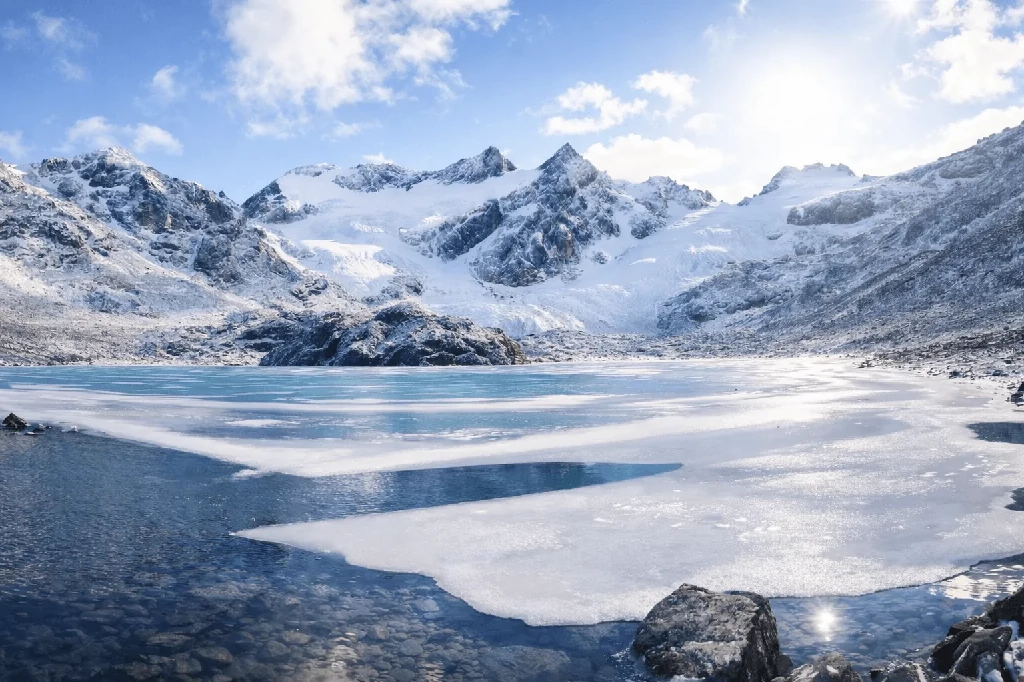
Vinciguerra Glacier is one of the largest glaciers in the area surrounding Ushuaia, and reaching it is one of the most complete hiking experiences at the End of the World. In a single day, you’ll cross an ancient peat bog, a lenga forest, a glacial moraine, and finally reach Témpanos Lagoon, an intensely turquoise glacial lake with the glacier in the background.
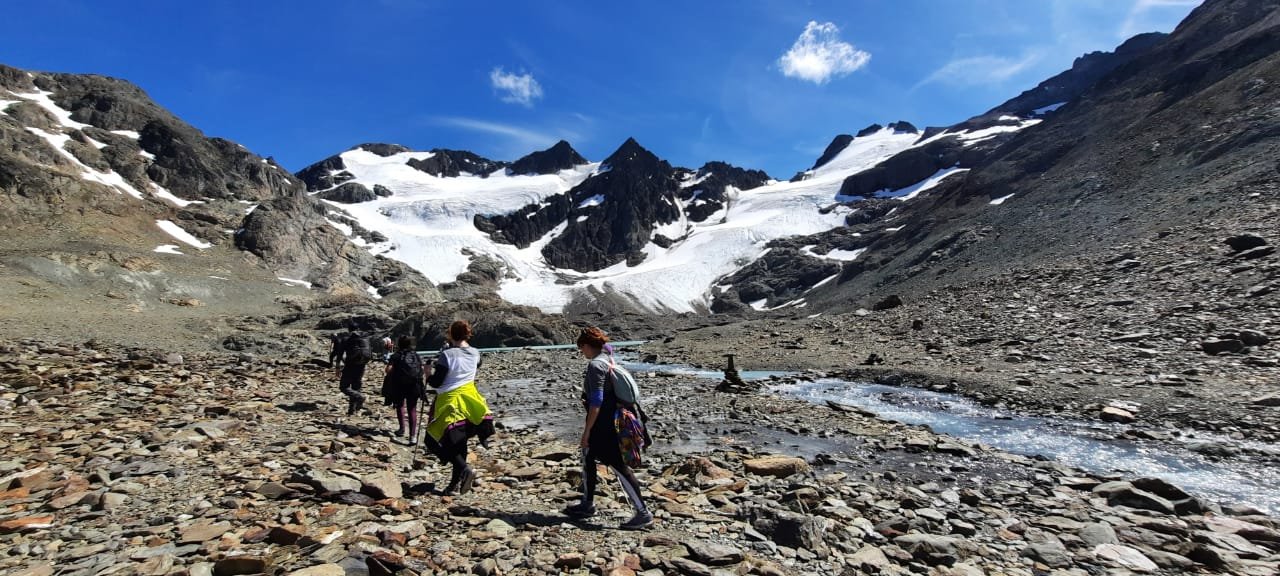
Unlike other more popular trails, this one is rarely crowded. The trailhead is just 7 km from downtown Ushuaia, in Andorra Valley, but the landscape feels remote from the very first kilometer.
This guide covers everything you need to know before heading out: how to get there, how long it takes, how difficult it is, the best time to go, and whether it’s better to hike independently or with a guide. If you’ve already done the Emerald Lagoon hike, think of this as its big sister: the same mountain range, more elevation gain, and a glacier at the end.
Trekking Essentials
This is a full-day trek without technical climbing, but it is physically demanding: approximately 12 km round trip with 650 m of elevation gain.
Trail Information
Trailhead: Gate at the end of Camino del Valle, Andorra Valley (7 km from downtown).
Distance: 11 to 14 km round trip, depending on the starting point.
Elevation gain: 600 to 700 m.
Lagoon elevation: Approximately 730 m above sea level (starting from around 150 m).
Duration: 7 to 8 hours with breaks (5 to 6 hours at a fast pace).
Difficulty: Moderate to challenging. Not technical, but long, steep, and muddy.
Best time to visit: October to April.
Access fee: Check before going (trail access conditions may change).
Figures vary between sources because each measures from a different point in the valley. If you’re hiking independently, plan for the longer option: 14 km and 8 hours.
How to Get to the Trailhead
The trail begins at the gate at the end of Camino del Valle, in Andorra Valley, about 15 minutes by car from downtown Ushuaia. We recommend taking our Trekking to Témpanos Lagoon and Vinciguerra Glacier excursion, but you can also drive there on your own.
The Trail, Section by Section
The trail has three distinct sections: a flat, wet area, a long climb through the forest, and a final rocky stretch above the tree line.
- The peat bog (km 0 to 2, almost flat). The first two kilometers cross the valley’s peat bog, a typical Tierra del Fuego ecosystem formed by mosses that have accumulated over thousands of years. The ground is always soaked, so it’s almost impossible to keep your feet dry. Shortly afterward, you’ll reach a fork with signs; follow the direction to Témpanos Lagoon (the other trail leads to Enchanted Lagoon).
- Crossing Arroyo Grande. A bridge crosses this glacial stream, which originates right at Vinciguerra Glacier. This is where the easy part ends.
- The climb through the forest (about 3 km). A continuous ascent begins through lenga, ñire, and guindo trees, with roots, mud, and steep slopes. Near kilometer 5, at the edge of the forest, there’s a waterfall fed by the glacier—a great place to rest and refill your water.
- The moraine and Témpanos Lagoon. After some high-altitude grassland, the final climb takes you over loose rocky terrain to the lagoon, at approximately 730 m above sea level. Its name comes from the blocks of ice that the glacier used to release into the water.
- The glacier’s terminus. From the lagoon, you can see Vinciguerra Glacier on the other side. To reach its base, you need to cross the river over a rocky passage and follow the right-hand shore for about 10 more minutes. This is where the ice caves are located, and they can only be explored with specialized guides.
The return follows the same route. Allow almost as much time for the descent as for the ascent: mud and loose rocks make it necessary to move slowly.
A glacier that changes every year. Today, you’ll see fewer floating icebergs than in photos taken decades ago. Vinciguerra is retreating, like most glaciers in Tierra del Fuego. The updated Provincial Glacier Inventory (2021–2023) reported that the area of exposed ice in Tierra del Fuego decreased by approximately 40% between 2013 and 2023, citing Vinciguerra among the documented cases. If you’re interested in this topic, the IANIGLA-CONICET National Glacier Inventory (in Spanish) includes the technical study of glaciers in the Beagle Channel basin, including Vinciguerra.
Best Time to Visit and What to Bring
The best time to visit is from October to April, when the trail is generally snow-free and the days are longer. In December and January, daylight lasts until after 10 PM.
Trail Conditions Throughout the Year
- Summer (December to February): The best conditions. The peat bog can be muddier due to snowmelt, but the climb is easier.
- Autumn (March to May): Red lenga forests and fewer people. Early snow may appear on the final section from April onward.
- Winter (June to August): Snow and ice throughout the route. Only with a guide, crampons or snowshoes, and winter hiking experience.
- Spring (September to November): Snow may remain at higher elevations until October or November. Check trail conditions before going.
Weather in Ushuaia can change within minutes, so the rule is to dress in layers, even in summer. Essential gear includes:
- Waterproof trekking boots with good traction (the peat bog is unforgiving if you’re wearing regular sneakers).
- Trekking pants and gaiters, if you have them.
- Thermal base layer, fleece mid-layer, and waterproof, windproof jacket.
- Hat, fleece gloves, and waterproof gloves.
- Sunglasses, sunscreen, and lip balm (sunlight reflects strongly off the glacier).
- At least 1.5 liters of water, lunch, and energy snacks.
- Trekking poles: especially helpful on the descent.
- Spare socks in a dry bag.
Independent Hiking or With a Guide?
You can hike to the lagoon independently if you have extensive mountain experience. However, reaching the glacier and entering the ice caves without a guide is not recommended:
- To Témpanos Lagoon: Independently, yes, with experience and good physical fitness. With a guide, yes.
- Approaching the glacier and ice caves: Independently, not recommended due to the risk of collapses and crevasses. With a specialized guide, yes.
- Transportation: On your own, you must arrange your own transportation both ways. With a guide, it’s included.
- Navigation: On your own, the final section has limited signage. With a guide, they’ll set the pace and lead the way.
- Winter: Independently, only with snow experience and your own equipment. With a guide, it’s the safest option.
If you’re hiking independently, follow these basic rules:
- Tell someone your route and estimated return time. There is no cell service along much of the trail.
- Download the track before leaving and carry an offline map on your phone.
- Set a turnaround time (for example, 2 PM) and stick to it, even if you haven’t reached your destination.
- Don’t climb onto the glacier or enter the ice caves without a guide. The ice moves, and cave ceilings can collapse without warning.
Our Trekking to Témpanos Lagoon and Vinciguerra Glacier excursion offers additional benefits you won’t have when hiking independently: round-trip transportation from your accommodation, a professional guide who knows the trail in every season, a box lunch to enjoy in front of the lagoon, trekking poles, and a satellite tracking system throughout the hike—essential on a trail with almost no cell service. By traveling with a licensed tour operator, you don’t have to worry about logistics: all you have to do is hike.
Frequently Asked Questions
How long does it take to reach Témpanos Lagoon? Between 3 and 4 hours uphill from the gate in Andorra Valley. The complete round trip takes 7 to 8 hours with breaks.
Is the Vinciguerra Glacier trek very difficult? It is moderate to challenging. It doesn’t require climbing skills, but good physical fitness is necessary: approximately 12 km with 650 m of elevation gain, mud, and a steep final section of loose rocks.
Can you do the trek without a guide? Yes, up to the lagoon, if you have mountain hiking experience. A specialized guide is required to approach the glacier and enter the ice caves.
Can you do it in winter? Yes, but there will be snow and ice throughout the route. A guide and crampons or snowshoes are recommended.
Are there still icebergs in the lagoon? Some, although fewer than decades ago. The glacier is retreating and now releases less ice into the lagoon.
How does it compare with the Emerald Lagoon trek? Emerald Lagoon is shorter and easier (approximately 9 km with little elevation gain). Vinciguerra is longer and more challenging, and includes a glacier at the end. Many travelers hike Emerald Lagoon first as preparation.
What other glaciers can you visit from Ushuaia? The most accessible is Martial Glacier, just a few minutes from downtown. Read our Martial Glacier guide.
Experience Vinciguerra with a Local Guide
If you want to reach the ice without worrying about transportation, the trail, or the weather, come with us. Our guides know the trail in every season and will take you safely to the glacier’s base.
Book the Trekking to Témpanos Lagoon and Vinciguerra Glacier.

Comment (0)